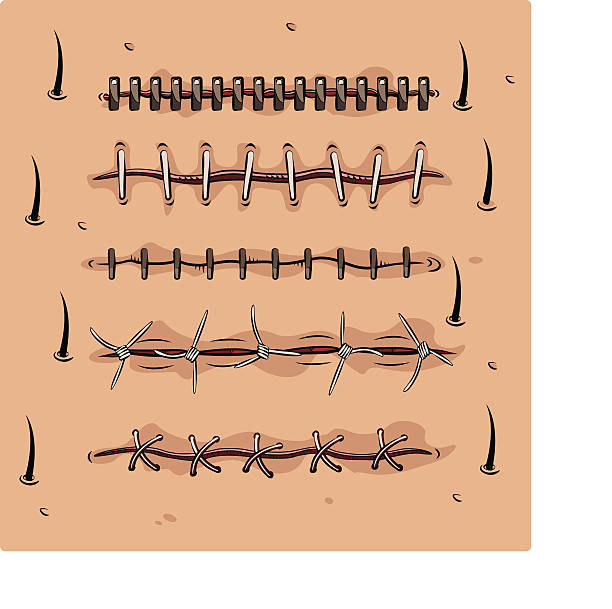
2. Grasping and Holding Instruments: Used to hold tissue to expose the surgical field or facilitate suturing; their design emphasizes a balance between secure grip and the avoidance of crushing injury. Adson Tissue Forceps: Often feature fine teeth (e.g., 1×2 teeth) for grasping skin or tough soft tissue, while toothless versions are used for extremely delicate structures like blood vessels or nerves. Babcock Forceps: Feature broad, flat, fenestrated jaws designed specifically to grasp hollow organs—such as the gastrointestinal tract or ureters—without causing perforation. Allis Forceps: Feature short teeth at the tips and provide a strong grip; commonly used to hold tough fascia or necrotic tissue destined for excision. 3. Hemostasis and Closure Instruments: Soft tissues are richly vascularized, making effective hemostasis and closure critical to surgical success. Mosquito Forceps: The smallest type of hemostat, used for the precise clamping of minute bleeding points. Needle Holders: Such as the Mayo-Hegar needle holder, used to grasp suture needles for soft tissue closure. 4. Energy and Minimally Invasive Instruments: A cornerstone of modern surgery, combining cutting and hemostasis capabilities. Ultrasonic Scalpel: Utilizes high-frequency ultrasonic vibrations to denature and coagulate tissue proteins, sealing small blood vessels while simultaneously cutting tissue, resulting in minimal thermal injury. Electrosurgical Unit (ESU): Uses high-voltage, high-frequency electrical current to perform electrosurgical cutting or coagulation.
Your inquiry cart is empty.
Add products you're interested in to request a quote.